Porcelain Lace at Home: Styling Dresden Pieces Room by Room

Some decorations shout. Dresden lace porcelain whispers. A little lady in a ruffled skirt on a dresser, a lamp glowing softly in a corner, and suddenly the whole room feels gentler.
But where do you actually put these delicate things? Let's look at how they were made first, then walk through the house together, room by room.
Lace That Went Through the Fire
The frills on these figures were once real cotton lace. A worker dipped the lace into slip, which is simply liquid porcelain, and then arranged it on the figure by hand while it was still soft.
In the kiln, the cotton burned away. Only the porcelain coating stayed, holding the exact pattern of the threads. That is why the ruffles look so airy, and also why they are so easy to break.
It is a German tradition linked to the Dresden area, and the pieces usually look back to Victorian fashion: full skirts, bows and tiny lace collars.
The Living Room: Let One Piece Lead
In a living room, a Dresden lamp works best as the star of one spot. Think of a sideboard, a console table, or the end of a bookcase. Give it some space around it, so the lace can be seen.
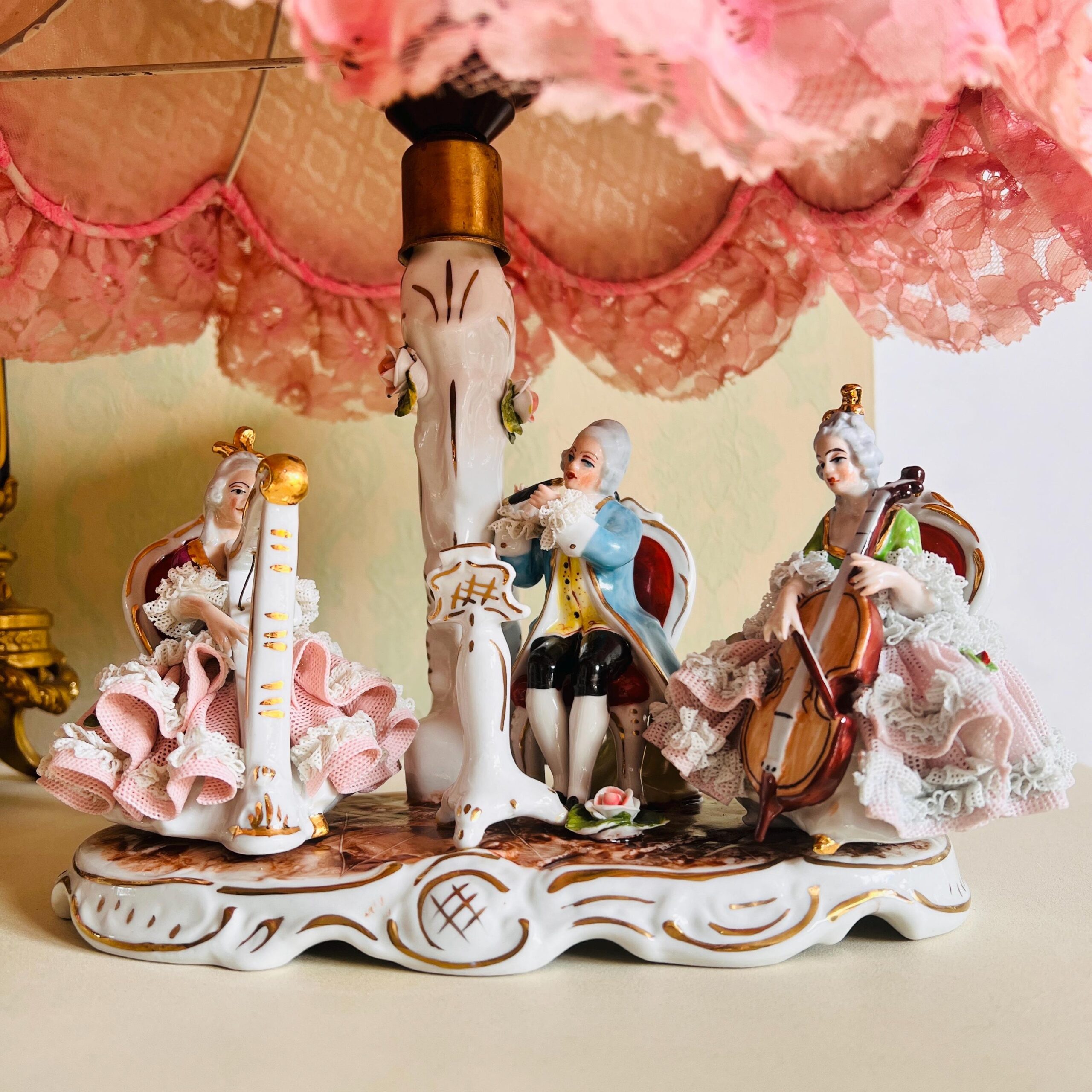
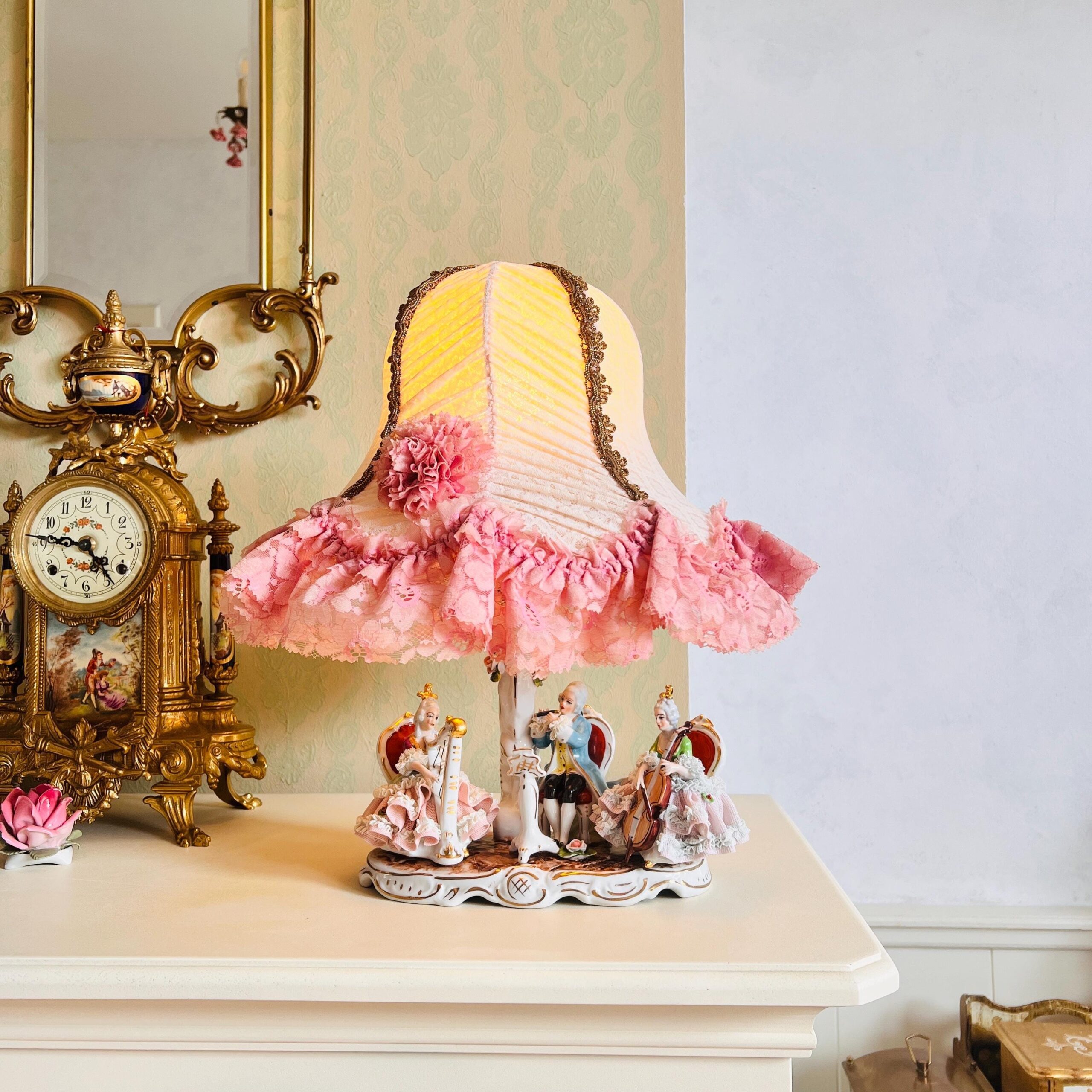
This 16 inch lamp is perfect for that. A group of lace figures plays musical instruments, like a tiny concert on your table. It carries the classic Dresden mark.
In the weeks before Christmas, add a few pine sprigs and a dish of walnuts nearby. The warm light on porcelain and greenery is cozy without any extra effort.
View this piece →
The Bedroom: Soft Light for Slow Evenings
These lamps were often called boudoir lamps, meaning lamps for a lady's private dressing room. So the bedroom is their natural home.
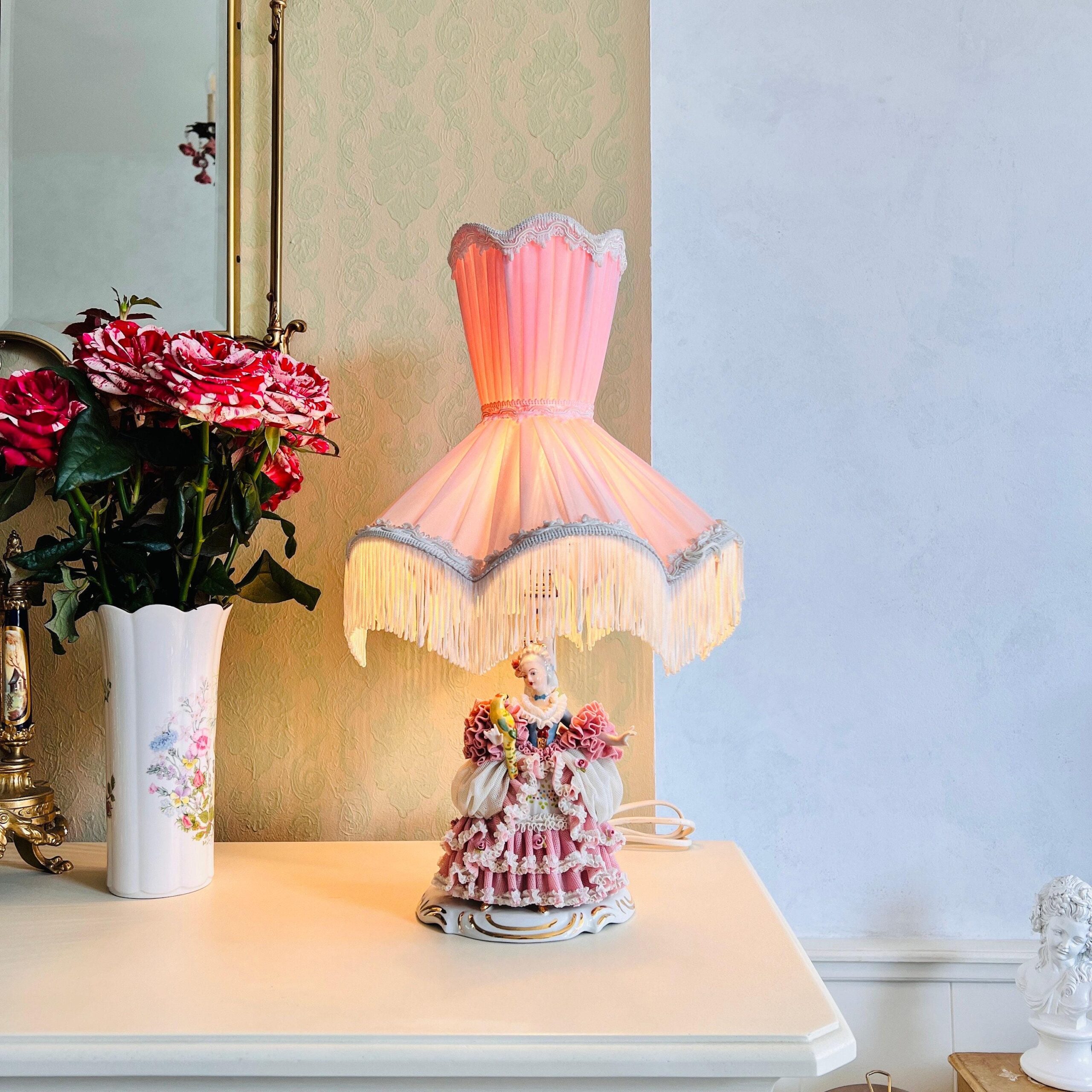
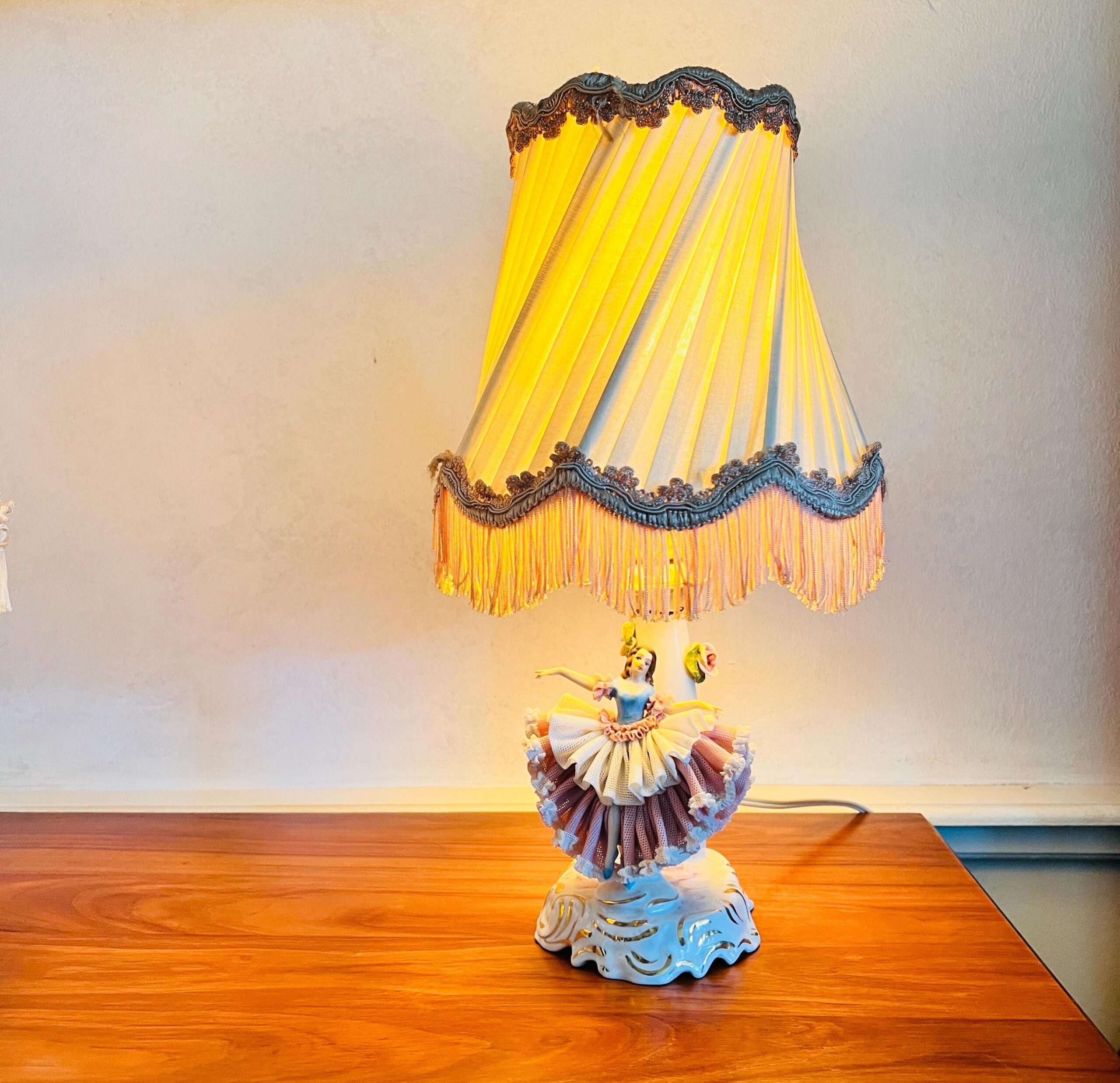
This 18.5 inch lamp has a lace lady on the base and a pink fringed shade. On a nightstand, it gives just enough light to read a few pages before sleep. Pair it with white linen, a stack of novels, and maybe a small tray for your rings.
One practical tip: keep it on the side of the bed you don't reach across in the dark. Lace and sleepy elbows are not good friends.
View this piece →
A Reading Nook or Guest Room
A smaller corner can take a lamp with a bit of romance, too. Picture an armchair, a soft throw, and a little side table. That's all you need.
This lamp is marked Crown N Dresden and Made in Germany. When you turn a piece over, look for marks like these, often in blue. "Made in Germany" usually means the piece was made with export in mind, so it tends to be from the later years rather than the earliest ones.
Place it where a guest will find it after a long trip. It's a kind welcome on a dark winter evening.
View this piece →
Shelves and Cabinets: Little Stories
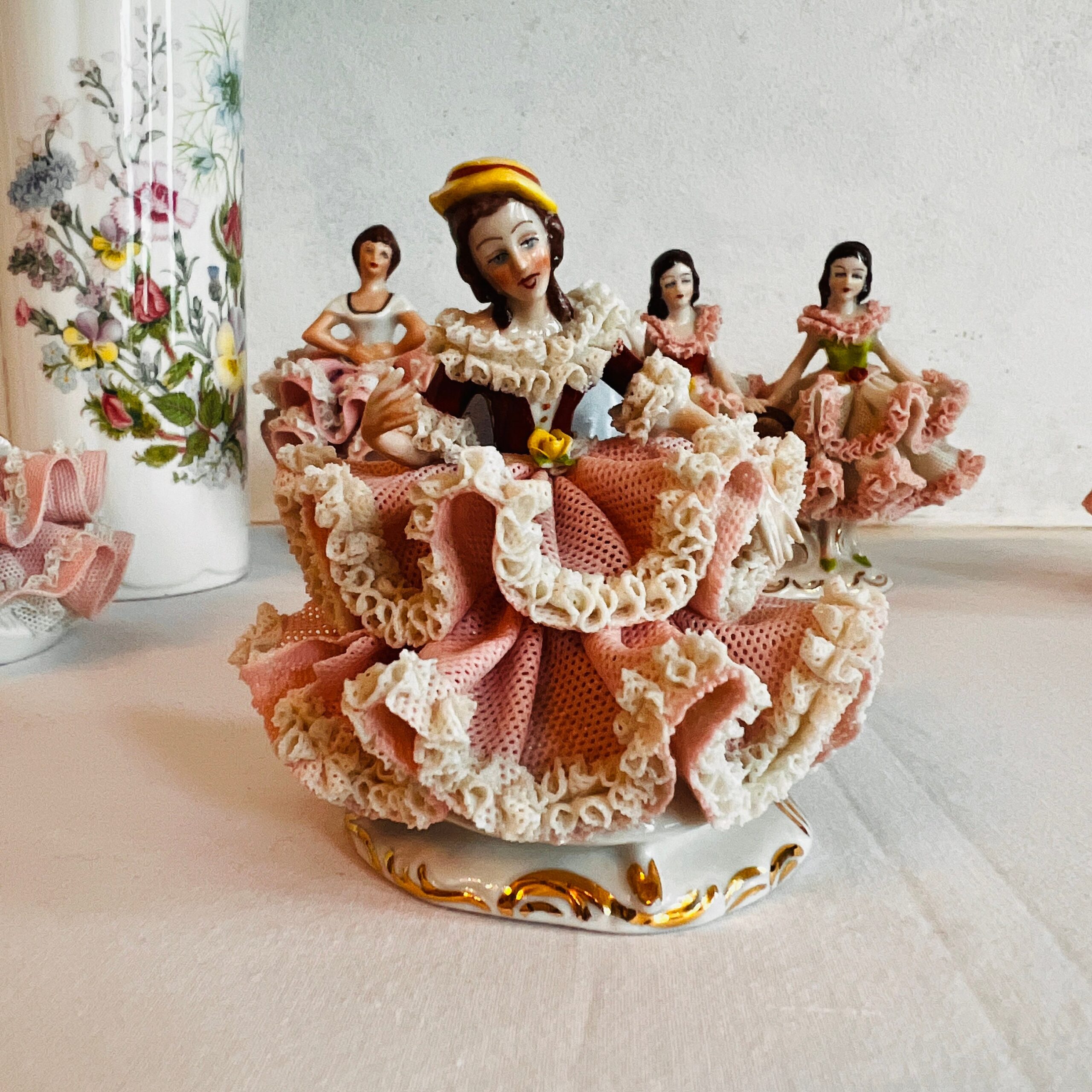
A single figurine can feel lost on a big shelf. The trick is to build a small scene around her. Lean an old book or two behind her, add a small mirror, or a silver frame.
This Victorian lady, marked on the bottom, fits right into that kind of setting. A glass cabinet is even better, because it keeps dust and curious hands away.
To clean, skip the cloth. Use a dry, soft makeup brush or a gentle puff of air to lift dust from the folds.
View this piece →
The Festive Table and Why People Collect
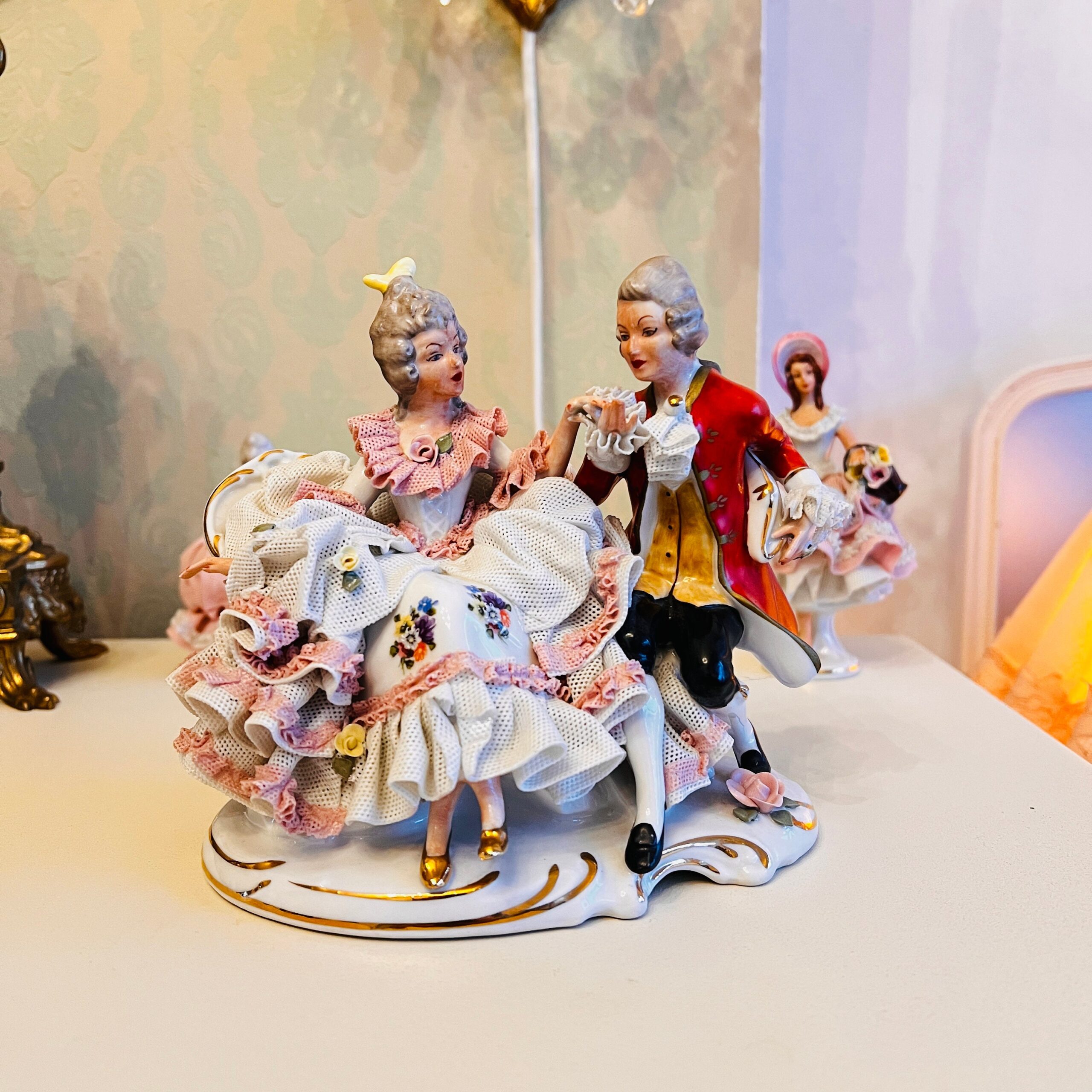
For Christmas or New Year, a lace couple can make a sweet touch on a sideboard next to the dinner table. Keep it away from candles and passing plates, and let it watch the party from a safe spot.
This Victorian couple, with the original Dresden mark, has that quiet, romantic mood people love. Collectors are drawn to these pieces because each set of ruffles was shaped by hand, so no two are quite alike.
When you buy any lace piece, look closely at the thin edges, fingers and hat brims. Those parts tell you most about how a piece has been treated over the years.
View this piece →
Dresden lace porcelain asks for a little care, but it gives back a lot of charm, especially on long, dark evenings. If one of these lamps or figures already has a spot waiting in your home, take your time browsing the collection and see which one feels like it belongs.